The playbooks that worked three years ago are dead. Nick Schlekeway breaks down what broker-owners face today and the assumptions they must abandon to survive.
Inman On Tour
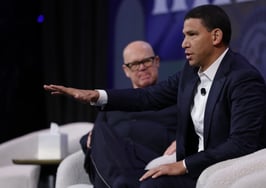
 Inman On Tour Nashville delivers insights, networking, and strategies for agents and leaders navigating today’s market.
The brokerage I built looks nothing like the one I imagined when I started. Every assumption I made about how this business would operate has been tested, revised or thrown out entirely. If you are running a brokerage the same way you did in 2023, you are already behind.
What running a brokerage in 2026 actually looks like today
Here is what the job actually looks like now and what we had to let go of to get here.
You are operating in a post-settlement buyer world
Buyer agency is no longer a nice-to-have conversation. It is operationally mandatory, consumer-facing and constantly questioned by the public.
Buyer agreements became a nationwide requirement effective Aug. 17, 2024, and must be signed before touring. NAR’s 2026 Professional Standards updates explicitly reference scenarios where buyers agree in writing to compensation, potentially with part coming from the listing side and the buyer responsible for the remainder.
The legal environment remains unsettled. HousingWire reports an appeal hearing that could impact the settlement and reshape compensation rules again.
I had to completely retrain my agents on how to lead with value, explain compensation and paper the relationship early. The old approach of touring first and talking later is dead. If a buyer objects to signing the agreement, you have a buyer consultation problem, not an agreement problem. The value is in how you present it.
You are managing MLS rule modernization
This is not administrative busywork. This is risk management.
NAR’s MLS policy summary notes mandatory policy compliance effective January 2026, with local adoption generally required by March 1, 2026, plus MLS self-certification requirements. NAR also announced the most extensive MLS Handbook update in 20 years.
You are not just running agents anymore. You are running governance, disclosure discipline, and operational safeguards. Every broker I know is spending more time on compliance infrastructure than they did two years ago.
Recruiting sounds the same everywhere
Culture. Training. Tools. Support. Every brokerage says these words. The differentiator is whether you can show an agent exactly how they will grow after joining.
Inman contributor Brett Jennings explicitly calls out that brokerages need a clear, memorable growth framework rather than a list of features. A framework turns your brokerage into a system for success, not a buffet menu of offerings.
When I recruit now, I draw the entire agent journey on a whiteboard. Absorption phase, experience phase, managing phase, arriving phase, entrepreneurship phase. I show them exactly where they will be in Year 1, Year 3, Year 5. If your value proposition reads like a list of amenities, you lose to whoever can articulate a path.
AI is not the future. It is the operational arms race right now
AI is getting baked into marketing, onboarding, follow-up and agent productivity faster than most broker-owners realize.
Inman’s 2026 leader predictions say AI is the common thread driving changes and will separate adaptable leaders from laggards. The brokerage case is clear: Reducing onboarding time and improving productivity creates compounding ROI.
My CRM now records all calls through the platform, and AI builds summaries right in the contact record. We use transcription tools to record meetings, then feed those transcripts to AI to draft blog content and newsletter copy. What used to require a marketing coordinator now happens in minutes.
Brokerages are shifting from training companies to enablement and automation companies. If you are still running training like it’s 2019, lecturing in conference rooms without workflow integration, you are falling behind every quarter.
Consolidation is real
Big players are stacking market share, services and platform leverage.
Compass just completed its acquisition of Anywhere Real Estate, closing the $1.6 billion deal in January.
“Compass is the biggest residential real estate brokerage in the U.S. by sales volume, with over $231 billion in sales volume as of 2024, according to RealTrends,” Inman’s Lillian Dickerson writes.
“Anywhere, in second place, is not far behind with $183.81 billion in sales volume in 2024. The combined companies’ agent count is also substantial — Compass has about 40,000 agents, and Anywhere has 51,000 at owned-brokerages, plus 250,000 at franchises.”
Independent brokerages can still win, but not by pretending scale does not matter. You win with focus, speed and a sharper niche system. We carved out luxury and investor-focused clients in our market because we could not compete on volume. We had to compete on depth of expertise and quality of service.
What we had to let go of
The hardest part of running a brokerage in 2026 is not learning new things. It is unlearning the assumptions that used to work.
We had to let go of touring first and explaining later. Now we lead with agreement, clarity and value because the regulatory environment demands it.
We had to let go of recruiting as the whole growth plan. You need a repeatable agent growth system that is easy to explain and prove. I cannot recruit on promises anymore. I have to show exactly how agents develop inside our system.
We had to let go of tech stacks as perks. Handing someone a CRM login and wishing them luck does not work. 2026 rewards brokerages that operationalize tools into workflows and speed. Here is the five-step follow-up flow, here are the templates, here is the training, here is the accountability structure.
We had to let go of our loose compliance posture. MLS rules and standards updates are forcing more structure, deadlines and risk discipline. I have compliance conversations weekly that I never would have had three years ago.
We had to let go of the idea that the industry has settled down. Even the settlement itself is still being contested. Your playbook has to stay flexible because the rules might change again.
What actually works now
The brokerages surviving 2026 share common traits. They treat retention as seriously as recruiting. They have documented systems that agents can follow. They operationalize technology instead of just purchasing it. They train agents to articulate value before showing a single property. They build compliance infrastructure proactively instead of reactively.
Most importantly, they stay humble enough to keep learning. The moment you think you have figured out how to run a brokerage, something changes. That is just the reality now.
Real estate is still a simple business. Generate prospects consistently, convert them reliably and serve clients excellently. But the operating environment around that simple core has become exponentially more complex.
Adapt, or watch the agents who want to build real careers choose someone who does.
 All this month, we’re focused on The New Brokerage Playbook. Running a brokerage in 2026 looks nothing like it used to. From major players to scrappy indies, we’ll map the new playing field and talk with brokerage leaders across the country about what’s working now — and what’s next.
Nick Schlekeway is the founder of Amherst Madison, a Boise, Idaho-based real estate brokerage. Connect with him on LinkedIn.
Topics: independent brokers Show Comments Hide Comments Sign up for Inman’s Morning Headlines What you need to know to start your day with all the latest industry developments Sign me up By submitting your email address, you agree to receive marketing emails from Inman. Success! Thank you for subscribing to Morning Headlines. Read Next How to define your target audience without losing existing business
 How smart brokerages are scaling service and redefining leverage
 The 3 stages of a listing — and how to win each one
 Asset vs. income: Why most businesses don’t compound
More in The New Brokerage Playbook
Asset vs. income: Why most businesses don’t compound
More in The New Brokerage Playbook
 Making the shift: Why I chose a cloud-based brokerage model
 Grit, not glamour: Lessons from 27 years in real estate
 Compete with giants: 5 strategies only indie brokerages can pull off
 A love letter to the small- to medium-size broker
Read next
Read Next
How to define your target audience without losing existing business
How smart brokerages are scaling service and redefining leverage
 From COLD to SOLD: 9 smart fixes for stagnant listings
 Reffkin floats idea for national MLS, says Compass previously declined to make a deal with Zillow

