
- Home
- Business
- Small Business
While many financial advisers are generalists, the complexity of wealthy clients' needs — combined with the rise of AI and consumer demand — suggests the future of financial planning belongs to specialized experts.
 By
Jared Trexler
published
23 December 2025
in Features
By
Jared Trexler
published
23 December 2025
in Features
When you purchase through links on our site, we may earn an affiliate commission. Here’s how it works.
Share Share by:- Copy link
- X

Financial advisers are feeling a shift in real time. Clients with growing wealth have increasingly nuanced needs, AI is reshaping service expectations, and competition among credentialed advisers is intensifying.
This article speaks directly to advisers who want to stay ahead of that curve. The question is no longer whether specialization is coming — it's how advisers can deliver it and communicate it in a way that resonates with today's clients.
While many advisers still operate as generalists, the complexity of wealthy clients' needs, combined with consumer demand and technological change, suggests the future of financial planning belongs to specialized experts.
From just $107.88 $24.99 for Kiplinger Personal Finance
Become a smarter, better informed investor. Subscribe from just $107.88 $24.99, plus get up to 4 Special Issues
CLICK FOR FREE ISSUE
Sign up for Kiplinger’s Free Newsletters
Profit and prosper with the best of expert advice on investing, taxes, retirement, personal finance and more - straight to your e-mail.
Profit and prosper with the best of expert advice - straight to your e-mail.
Sign upThe profession is maturing
The financial services profession is going through a significant maturation. CFP Board's public awareness campaign and resulting growth have helped create a well-recognized, credentialed baseline for financial planners and those they serve.
The American College of Financial Services' Chartered Financial Consultant® (ChFC®) provides the same education (plus an additional course) without the high-stakes exam or bachelor's degree requirement, but it isn't as well known to the general public.
About Adviser Intel
The author of this article is a participant in Kiplinger's Adviser Intel program, a curated network of trusted financial professionals who share expert insights on wealth building and preservation. Contributors, including fiduciary financial planners, wealth managers, CEOs and attorneys, provide actionable advice about retirement planning, estate planning, tax strategies and more. Experts are invited to contribute and do not pay to be included, so you can trust their advice is honest and valuable.
Together, these credentials point to a potential future where half (or more) of advisers will hold one or both, raising the proficiency floor while also making it harder for advisers to stand out on credentials alone.
Beyond the expertise of a generalist
That level of baseline education is incredibly valuable to the majority of American families. Yet advisers tend to desire clients with wealth, generally $1 million or more in investable assets, and with wealth, comes complexity that often stretches beyond what a generalist can comfortably navigate.
This is where advisers typically turn to their centers of influence for guidance, but many still end up wading through complexity on their own.
Early in my career, I remember reading horror stories that resulted not from bad intentions but from avoidable knowledge gaps. Ed Slott and Company's events were filled with examples: distribution errors that triggered unnecessary taxes, paperwork mistakes that derailed wealth transfer plans and timing missteps that couldn't be undone.
Not a single one dealt with a poorly allocated portfolio. They were all issues rooted in technical details.
Navigating this kind of complexity doesn't always require more time — it requires knowing what to do when, understanding the downstream implications and having the confidence to anticipate problems before they occur.
That's what most consumers in our recent research with Endeavor Business Intelligence say they want. And it raises the central question for advisers: How do we deliver it consistently and credibly?
Specialization is gaining momentum
A segment of the profession is already embracing specialization. Many thought leaders, and a growing number of advisers, talk about the value of niche expertise, the discipline it requires and the difference it makes in serving clients with highly specific needs.
But there are still far too many generalist advisers positioning themselves as specialists. From where I sit, raising consumer awareness and strengthening education is one of the most effective paths forward.
Specialists do exist in financial planning; consumers simply don't yet have an easy way to identify them.
Once consumers understand that financial planning is evolving, in a way similar to other professions that developed deep specialties over time, they will quickly recognize the value of differentiated expertise, even if they don't yet know how to spot it in a bio or on a business card.
That broader understanding is still likely a decade away. But AI could accelerate the shift by absorbing more of the generalized advice that younger or less complex clients typically need.
That would increasingly force advisers to distinguish themselves not by the basics, but by the depth of their technical knowledge and their ability to guide behavior through uncertainty.
How advisers can deliver specialization: Starting now
Consumers are already looking for advisers who can help them with very specific needs. Advisers who lean into this shift early will have a strategic advantage.
Here are steps advisers can take now to signal their specialization and deliver deeper expertise:
1. Define the complexity you want to serve
Rather than trying to "specialize in everything," advisers should identify the intersection of:
- The client problems they are best equipped to solve
- The scenarios they encounter frequently
- The areas where they already have deeper education or interest
Clarity here doesn't limit growth — it directs it.
2. Strengthen the technical foundation
Specialization must be backed by education. Programs such as the ChFC®, CLU®, RICP® or WMCP® provide structured paths toward deep expertise in areas ranging from retirement income to insurance to portfolio construction.
This kind of training goes beyond high-level guidance and equips advisers to handle complex client scenarios confidently.
3. Formalize a network of experts
No specialist operates alone. Advisers should develop a consistent, vetted ecosystem of tax professionals, estate attorneys and insurance experts.
Making these relationships visible to clients reinforces credibility and signals that the adviser is committed to delivering comprehensive expertise, not just general advice.
4. Communicate differentiation clearly
Clients cannot hire what they cannot identify. Advisers should:
- Update digital bios to reflect precise areas of expertise
- Create brief educational content that showcases specialty knowledge
- Highlight specific client scenarios they solve (without revealing identities)
Consumers increasingly look for advisers who "speak their language," and specificity communicates confidence.
5. Use AI to elevate, not replace, expertise
Advisers should embrace AI for what it does best: streamline analysis, automate routine tasks and model scenarios quickly.
Interested in more information for financial professionals? Sign up for Kiplinger's twice-monthly free newsletter, Adviser Angle.
That frees up time for advisers to focus on the high-value work only humans can do, interpreting goals, coaching behavior and navigating complexity.
AI will not diminish the role of advisers. It will amplify the advantage of those with deep expertise.
The path forward for advisers
Consumers already want specialists. The industry is moving in that direction. AI will only accelerate the shift.
Advisers who embrace specialization and make it visible, credible and consistent will be better positioned to serve the complex needs of wealthier clients, differentiate themselves in a crowded marketplace and build stronger, longer-lasting relationships.
The advisers who thrive in the decade ahead will not be those who try to be everything to everyone.
They will be the ones who confidently step into the areas where they deliver exceptional value and communicate that specialization clearly to the clients who need it most.
Related Content
- Smart Business: How Community Engagement Can Help Fuel Growth
- From Vision to Value: A Blueprint for Helping to Build Your Advisory Practice
- Don't Just Sell, Connect: How Financial Advisers Can Ignite Their Sales Growth
- Serving the HNW Market: How Financial Advisers Can Break Through and Deliver Lasting Value
- Winning Strategies for Financial Advisers as Clients' Lives Evolve
This article was written by and presents the views of our contributing adviser, not the Kiplinger editorial staff. You can check adviser records with the SEC or with FINRA.
TOPICS Adviser Intel Adviser Angle AI Get Kiplinger Today newsletter — freeContact me with news and offers from other Future brandsReceive email from us on behalf of our trusted partners or sponsorsBy submitting your information you agree to the Terms & Conditions and Privacy Policy and are aged 16 or over. Jared TrexlerSenior Vice President, Chief Marketing and Strategy Officer, The American College of Financial Services
Jared Trexler serves as a senior vice president and chief marketing and strategy officer at The American College of Financial Services. In this role, he leads branding, strategic and executive communications, digital media, events and demand-generation efforts, as well as overseeing the growth of The College's three strategic focus areas. Trexler previously served as director of strategic and executive communications at The College, working with President and CEO George Nichols III, CAP®, and The College's leadership team to draft compelling narratives that best communicated strategic initiatives, new education programs, and the missions of The College's Centers of Excellence.
Latest-
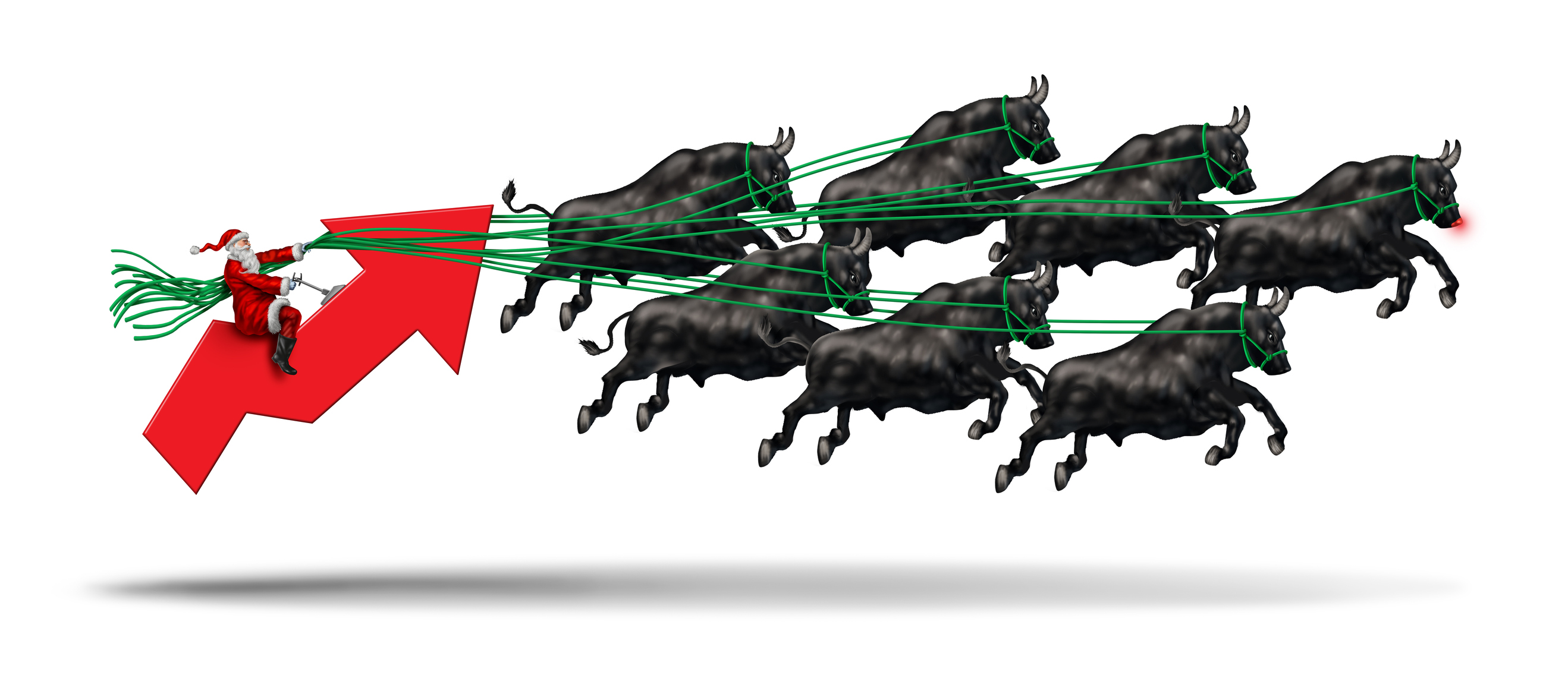 The Santa Claus Rally Officially Begins: Stock Market Today
The Santa Claus Rally is officially on as of Wednesday's closing bell, and initial returns are positive.
-
 How to Leave Different Amounts to Adult Children Without Causing a Rift
Here’s how to leave different amounts to adult children without causing a family rift.
-
 My Retirement Learning Curve, 1 Year In
A retiree checks in with what they wish they knew early on and what they've changed about their plan one year in.
-
The Santa Claus Rally Officially Begins: Stock Market Today
The Santa Claus Rally is officially on as of Wednesday's closing bell, and initial returns are positive.
-
 Introducing Your CD's Edgier Cousin: The Market-Linked CD
Traditional CDs are a safe option for savers, but they don't always beat inflation. Should you try their counterparts, market-linked CDs, for better returns?
-
 'Humbug!' Say Consumers, Despite Hot GDP: Stock Market Today
"The stock market is not the economy," they say, but both things are up. Yet one survey says people are still feeling down in the middle of this complex season.
-
 The SEC Is Concerned for Older Investors and Retirement Savers. Here's What You Should Know.
The SEC focusing on older investors, retirement and college savers, and private securities. Here's how those changes impact you.
-
 Why You Should Pay Attention to Company Guidance
Understanding how corporate profit forecasts affect analysts’ estimates and stock ratings can help you make investment decisions.
-
 How to Protect Yourself and Others From a Troubled Adult Child: A Lesson from Real Life
This case of a violent adult son whose parents are in denial is an example of the extreme risks some parents face if they neglect essential safety precautions.
-
 To Build Client Relationships That Last, Embrace Simplicity
As more automation becomes the norm, you can distinguish yourself as a financial professional by using technology wisely and prioritizing personal touches.
-
 Stocks Rise to the Spirit of the Season: Stock Market Today
Investors, traders and speculators are beginning to like the looks of a potential year-end rally.